This is how Christmastime looked like back in May 1975 in the final scene of Carousel of Progress (Believe it or not, that final scene is actually set on New Years Eve).
And this is today:
Thursday, May 24, 2012
Sunday, May 13, 2012
Honoring ‘Attraction Moms’
Mad props to you Mom from the 1983 version of Spaceship Earth
for never getting tired of watching television with your daughter every
night before bed. (Not to mention letting millions of guests peer into
your nightly routine.)
World of Motion Mom, kicking it in the front seat,
joining her family, and sharing in their joy of watching new flying
machines take to the air.
Finally, thanks Horizons Mom for always making sure your child never floated away.
A big Happy Mother’s Day to all of the great moms of this world – real or Audio-Animatronic.
Friday, April 13, 2012
New Orleans Square Officially Opens - One of the Last Times Walt E. Disney was on Film
The footage you are about to see is bittersweet. It shows one of the last times Walt was on film enjoying his park. The day was July 24, 1966 (Walt died later that year). Walt and New Orleans Mayor Victor Schiro officially opened New Orleans Square. It was the first time since opening day in 1955 that a new land had opened. It was also the only area at the park named after a real city. Guests enjoyed shopping, dining and music, and Pirates of the Caribbean opened the following year.
Sunday, April 08, 2012
Happy 1986 Easter
Back in March 1986, Mickey and Minnie (look at her Easter bonnet!) took some time out from their busy schedules to join Mr. & Mrs. Easter Bunny in Magic Kingdom Park.
Friday, March 16, 2012
Thursday, March 15, 2012
Disneyland Guest Count
The 1 millionth guest to Disneyland in California was on September 8, in the year of 1955. The name was Elsa Marquez.
10 Millionth Guest: Leigh Woolfenden December 31, 1957
25 Millionth Guest: Dr. Glenn C. Franklin April 19, 1961
50 Millionth Guest: Mary Adams August 12, 1965
100 Millionth Guest: Valerie Suldo June 17, 1971
200 Millionth Guest: Gert Schelvis January 8, 1981
250 Millionth Guest: Brook Charles Arthur Burr August 24, 1985
300 Millionth Guest: Claudine Masson September 1, 1989
400 Millionth Guest: Minnie Pepito July 5, 1997
450 Millionth Guest: Mark Ramirez March 15, 2001
500 Millionth Guest: Australian Bill Trow January 12, 2004
10 Millionth Guest: Leigh Woolfenden December 31, 1957
25 Millionth Guest: Dr. Glenn C. Franklin April 19, 1961
50 Millionth Guest: Mary Adams August 12, 1965
100 Millionth Guest: Valerie Suldo June 17, 1971
200 Millionth Guest: Gert Schelvis January 8, 1981
250 Millionth Guest: Brook Charles Arthur Burr August 24, 1985
300 Millionth Guest: Claudine Masson September 1, 1989
400 Millionth Guest: Minnie Pepito July 5, 1997
450 Millionth Guest: Mark Ramirez March 15, 2001
“I’m completely stunned and speechless!” said Mark
Ramirez of Texas, Disneyland’s 450 millionth guest to pass through the
turnstiles and step into Walt Disney’s original magic kingdom. “I’m so
excited, I’m shaking!” he laughed. “This is the most exciting thing that
has ever happened to us.” Ramirez was on vacation with his wife, Donna
and their three daughters Nina, Ariana, and Alexandria when his
milestone entrance granted him a celebration ceremony, a lifetime pass
to the Disneyland Resort, a stay at Disney’s Grand Californian Hotel and
a merchandise gift pack. And the best gift of all was that he became a
part of Disneyland history. Ramirez got to officially change the
attendance sign on the Disneyland Train Station from 400 million to 450
million.
500 Millionth Guest: Australian Bill Trow January 12, 2004
Friday, March 02, 2012
Disney Studio Store
Following the success of Disney’s Snow White and the Seven Dwarfs,
Walt Disney saw a need to increase the size of his studio. Using the profits from Snow White, Walt
made a deposit on 51 acres of land in Burbank, California in 1940 and
began work on a modern studio specifically designed for the making of animated films.
Walt was
personally involved in every aspect of the studio’s conception and he
ensured that the studio would be a self-sufficient facility that provided everything his team would need for the
entire production process.
There was the Animation Building in the center, which housed
the artists and animators, the Inking and Painting buildings across the
way, and the Camera buildings next door, where the completed artwork was
photographed. Walt had a number of the
buildings linked together by an underground tunnel so that even in bad
weather, the production process would not be interrupted.
This new Burbank studio would be the production site of several of Disney’s most prominent animated features, including Bambi, Cinderella, Alice in Wonderland, and Peter Pan.
On October 15, 1995, Walt Disney Studios welcomed its very own Disney
Store to the lot, named the Studio Store. This Disney Store was created with the intention of providing Cast Members
with a home store to purchase the exclusive and unique products Disney offers
in Stores everywhere. Located next to the Hyperion Bungalow, an
original building from the studio’s first location in Hollywood, the
Studio Store was redesigned in 2011 to display a beautiful new interior
design of a Disney historical timeline, featuring the major milestones
and famous characters that define the extensive history of the Walt
Disney Company.
To learn more, visit Liz, the Official Disney Store Blogger: http://blog.disneystore.com/blog/2012/03/flashback-friday-disney-studio-store-history.html
Tuesday, December 20, 2011
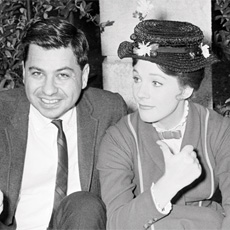
Disney Legend Richard Sherman Shares His Memories of Walt
Many virtues define a true legend, but divine talent is what differentiates "Disney Legends." For the second segment of our "Lunch with a Legend" series, the Insider broke bread with Disney Legend Richard Sherman who (along with brother Robert) was half of the only songwriting-composing team ever to work on staff for The Walt Disney Company. From "Mary Poppins" to "Winnie the Pooh,"
this award-winning duo is known the world over – if not by name, then
by song. Though Richard admits he's shared them a "million times," the
master showman was thrilled to recount some of his most poignant
memories.
Meeting Walt Disney
"Here's how it all began for my brother Bob and myself ... we were freelance pop songwriters and a little girl named Annette Funicello sang a song we'd written called 'Tall Paul,' which became a really big hit. We started writing songs specifically for her, and had hits with 'Pineapple Princess' and 'Jo Jo, the Dog-Faced Boy' – big rockers back in 1959/1960. Little did we know Annette was Walt Disney's very favorite Mouseketeer ... he listened to all her songs and liked what he was hearing."
Things changed when Walt wanted Annette to sing in a TV movie called "The Horsemasters" since her records were so popular – and requested that the brothers write the song. "Jimmy Johnson [head of the record company] asked if we wanted to give it a shot, so we wrote 'The Strumming Song.' Jimmy liked it, but said Walt would have the final word. We asked 'Walt who?'" After learning that the Walt in question was Walt Disney, Richard wanted to demo the song with a female singer before the meeting, but was told Walt likes hearing things the way they were written.
With trepidation, the brothers brought their song up to Walt's office. "Now picture this ... Walt was sitting behind his desk signing pictures. I'll never forget it because it was our first meeting with the great man. He looked up and asked if we were really brothers because there were a lot of brother acts in vaudeville with people who weren't really brothers. I said 'No, we actually have the same parents!'"
When Walt began discussing "The Parent Trap," both brothers immediately knew he was talking about the wrong film. "I was dying, but my brother Bob was brave enough to say that we were there with Annette's song for 'The Horsemasters.' I mean, how do you tell an icon he's telling you the wrong story?" After what Richard calls the most brutal performance of "The Strumming Song," Walt said, "That'll work," and gave them a script to see what they could come up with for "The Parent Trap." Richard and Robert were completely bewildered and thought the worst. "Jimmy said, 'Are you kidding? He bought one song and gave you another assignment!' We didn't even realize he LIKED what we had done. So that was our very first encounter with the man who changed our lives forever."
From there, they went on to write songs for "The Parent Trap," "Zorro," "Texas John Slaughter," and many other films and television shows. "Walt kept giving us assignments – he was testing us. He'd always say, 'That'll work,' and give us another assignment. Jimmy told us to keep'em coming."
"Mary Poppins"
Little did they know their careers would be thrown into overdrive when Walt asked "The Boys"
(his nickname for the brothers) if they knew what a nanny was. Their
reply? "Yeah, it's a goat! We thought he wanted us to write a song for a
nanny goat!" But Walt asked them to read P.L. Travers' book "Mary
Poppins," and let him know what they thought. "He threw the gauntlet
down and wanted to see what we'd do with it. So Bob and I read these
very charming stories, but panic struck when we realized there was no
storyline – it was strictly about a nanny who flies in on the east wind,
takes the Banks' children on wonderful adventures, and flies out when
the west wind comes along."
Not knowing where to start, they selected six chapters to loosely base a story on – and the chosen adventures inspired scenes like "Jolly Holiday" and "Feed the Birds." Richard recalls the follow-up meeting with Walt. "Walt was as excited as we were! He fell in love with 'Feed the Birds,' which became his favorite song. When we were done, he asked to see our notes, which were pretty dog-eared from underlining and highlighting. We gave him our book and then he pulled out his copy. He had underlined the same six chapters – that was gooseflesh time. It really, really was amazing."
Walt then invited Richard and Robert to work at Disney. "We said YES, we'd love to work here! He already had a contract written up and told us we'd have an office down the hall. Walt wanted us to develop the story with screenwriters Bill Walsh and Don DaGradi, but called it our 'backburner project' because he planned on giving us lots of work. And that was the turning point in our lives ... two beloved stories that I vividly recall, and both involved Walt Disney."
Aside from "Mary Poppins," the Academy-Award®-winning duo (they garnered two for "Mary Poppins" alone!) wrote songs and scores for countless Disney classics, including "The Jungle Book," "The Aristocats," "Bedknobs and Broomsticks," and the "Winnie the Pooh" short films. Though Richard says they were always creatively connected to Walt, their time with him was limited but intense. "We started with Walt in 1960 until 1966. Walt was very, very thoughtful and kind to us ... if he liked what you were doing, he'd never gush. You'd always hear from someone else that he flipped for whatever it was you did. When he died, we worked at the studio for several years, but it just wasn't the same. We've had a wonderful career thanks to Walt Disney."
Richard is currently working on his second album of instrumental music, which he calls a cross between pop and semi-classical. "I've always been a happy person. I'm very positive and so was Walt ... that's what he liked. If our music makes people feel good about themselves and gives them hints about how to act, I think we were very lucky to write those songs. It's a nice feeling to know the rest of the world responds to your material."
Sunday, December 18, 2011
Did you miss it? Davy Crockett’s Window in Frontierland
Have you seen the window in Frontierland dedicated to Fess Parker, the man known to millions of baby-boomers as legendary frontiersman Davy Crockett?
Five years ago this week, Fess Parker received the highest honor Disneyland Resort bestows when the park unveiled a tribute window. Parker’s salute included an entirely rethemed building facade which paid tribute to Parker’s portrayal of Davy Crockett, along with his sidekick Georgie Russel, played by the late actor Buddy Ebsen. Parker and Ebsen were featured stars at the grand opening of Disneyland on July 17, 1955.
In his role as Davy Crockett, Fess Parker helped promote and open Disneyland Park. In the photos below, you’ll see Davy Crockett walking through a yet-to-be finished Disneyland park and later with Walt Disney riding a horse on Main Street, U.S.A.
The tradition of honoring individuals with a personalized decorative window was started on Main Street by Walt Disney himself and has continued throughout Disney parks worldwide.
Friday, December 16, 2011
2 years without Roy E. Disney
Roy E. Disney, Key Figure in Revitalizing The Walt Disney Company, Disney’s Animation Legacy, Dies at Age 79
posted on December 16th, 2009 by Thomas Smith, Social Media Director, Disney Parks
Roy Edward Disney, son of Disney Studios co-founder Roy O. Disney, and nephew of Walt Disney, passed away today (12/16/09) at Hoag Memorial Hospital Presbyterian in Newport Beach, California, following a year-long battle with stomach cancer. He was 79 years old. Disney was a successful businessman, philanthropist, filmmaker, and award-winning sailor, who played a key role in the revitalization of The Walt Disney Company and Disney’s animation legacy. He was associated with the Company over a 56-year period, and from 1984 – 2003, served as vice chairman of the Company’s board of directors, and chairman of the Studio’s Animation Department. In recent years, he held the title of director emeritus and consultant for the Company.
As head of Disney Animation, Disney helped to guide the Studio to a new golden age of animation with an unprecedented string of artistic and box office successes that included “The Little Mermaid,” “Beauty and the Beast,” “Aladdin,” and “The Lion King.” He personally executive produced “Fantasia/2000,” a sequel to the 1940 Disney classic, and served in a similar capacity on a number of recent animated shorts, including the 2004 Oscar®-nominated “Destino,” based on storyboards and original art by the iconic artist Salvador Dali. In the area of live-action films, Disney and his wife, Leslie DeMeuse Disney, most recently executive produced the 2008 feature documentary, “Morning Light,” which followed a group of young sailors as they competed in the grueling Transpac race from Los Angeles to Honolulu.
His philanthropic activities included sponsorship of the Roy E. Disney Center for the Performing Arts at the National Hispanic Cultural Center in Albuquerque, New Mexico. The Roy and Patricia Disney Family Cancer Center, part of Providence Saint Joseph Medical Center in Burbank, California, is scheduled to open in spring, 2010.
Commenting on the announcement, Bob Iger, president and CEO of The Walt Disney Company, said, “On behalf of everyone at Disney, we are saddened by the loss of our friend and colleague Roy E. Disney. He was much more than a valued 56-year Company veteran – Roy’s true passion and focus were preserving and building upon the amazing legacy of Disney animation that was started by his father and uncle. Roy’s commitment to the art of animation was unparalleled and will always remain his personal legacy and one of his greatest contributions to Disney’s past, present and future.”
John Lasseter, chief creative officer for Walt Disney and Pixar Animation Studios, added, “I first met Roy when I was still an animation student at CalArts. Not only did I consider him a personal friend, but he was a great man who believed deeply in the art of animation. He put his heart and soul into preserving Disney’s legendary past, while helping to move the art of animation into the modern age by embracing new technology. Roy was a visionary and passionate supporter of the art form, and he was all about quality. I was always impressed that he would make time for someone like me when I was fresh out of college, and he continued to support and encourage me throughout my career.”
Stanley Gold, president, Shamrock Holdings, said, “Roy and I enjoyed a 35-year friendship and partnership that was simply special. We faced many business challenges together, had fun in the process, and enjoyed a wide variety of professional successes. Roy was a man who was steadfastly loyal to his principles and to his friends. He was a gracious, humble gentleman who could make the tough decisions life sometimes requires. He carried the torch high and proud, and the world is a better place for his tireless efforts. I will miss him greatly.
Roy Edward Disney was born in Los Angeles on January 10, 1930 to Roy O. Disney and Edna Francis Disney. His father and his uncle, Walt Disney, co-founded the Disney entertainment business in 1923.
After attending Harvard School and Pomona College, Disney launched his entertainment industry career in 1952, working as an assistant film editor on the “Dragnet” TV series.
He joined The Walt Disney Studios in 1953 as an assistant film editor, where his credits included the landmark Academy Award®-winning True-Life Adventures features, “The Living Desert” and “The Vanishing Prairie.” As a writer and production associate, he received Oscar® nominations for his work on the short subject, “Mysteries of the Deep” in 1959, and in 2003 for his work as executive producer for “Destino.”
Disney produced and directed some 35 other TV and theatrical production, including the landmark 1968 documentary, “Varda, the Peregrine Falcon,” before leaving in 1977 to become an independent producer and investor.
In 1978, Disney founded Shamrock Holdings, Inc., a wholly-owned family enterprise headquartered in Burbank, California, which specializes in private equity, real estate, and public equities investing. He served as chairman of the company, which has approximately $1.5 billion of capital committed to funds.
An avid competitive sailor, Disney holds several elapsed-time records for offshore races in the Pacific Ocean, including multiple wins in the 2,225-mile Transpac.
Among his many professional and philanthropic activities, Disney served on the board of trustees of California Institute of the Arts, the advisory board of St. Joseph Medical Center, and the board of Big Brothers and Big Sisters of Greater Los Angeles, Inc. Additionally, he was an advisory member of the board of directors of the United States Committee for UNICEF, chairman emeritus of the board of directors of the Peregrine Fund, a member of the board of trustees of Ronald McDonald House charities, and a member of the board of trustees of the American Ireland Fund.
In 1993, he received the Winsor McCay Award (a special “Annie Award”) from ASIFA-Hollywood (The International Animated Film Society). The McCay Award is for lifetime achievement in animation. In 1997, Disney was awarded the first “Mort Walker Award for Outstanding Contributions to the Cartoon Industry,” by the Boca Raton International Museum of Cartoon Art.
Disney received an honorary Doctor of Fine Arts degree from his alma mater Pomona College in 1998. In 2002, he received an honorary Doctor of Fine Arts degree from Mercy College in New York. The following year, he was presented with the Trustees’ Award and honorary Doctor of the Arts degree from CalArts.
Among his other honors, Disney was named a recipient of the 1999 National Catholic Education Association Elizabeth Ann Seton Award, which recognizes individuals who have made significant contributions to children and education. In April 1999, Disney received the Henry Bergh Humane Award from the ASPCA, and in spring 2000, he was awarded the Inaugural Environmental Leadership Award from the Audubon Society.
Disney is survived by his wife, Leslie, and four children from his marriage to Patricia Dailey Disney – Tim Disney, Roy Patrick Disney, Abigail Disney, and Susan Disney Lord. He is also survived by 16 grandchildren.
Funeral services will be private, followed by cremation. His ashes will be scattered at sea. Plans for a Life Celebration will be announced shortly. In lieu of flowers, donations can be made in his name to The Roy and Patricia Disney Family Cancer Center at Providence Saint Joseph Medical Center in Burbank, California.
Subscribe to:
Posts (Atom)